Biografies: Skatalites & Eek-A-Mouse
puertoreggae.com
The Skatalites
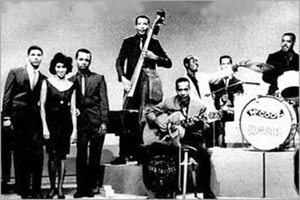 In Jamaica in the mid-50's, a fledgling recording industry saw the birth of what became known as Ska. Created by fusing Boogie-Woogie, Blues, R+B, Jazz, Mento, Calypso and African rythyms, Ska became the first truly Jamaican music and by the 60's all the vocalist were swarming to the studios to record their songs to this infectious new beat. Bob Marley, Peter Tosh, Toots and the Maytals, Jimmy Cliff, Alton Ellis, Ken Boothe are just a few of the names who came to record this new music, which coincided with the whole island's excitement about Jamaica's independence in 1962. The core musicians playing on most of these sessions saw the opportunity to play this music live to the public.
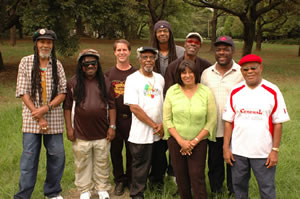 Tommy McCook, Rolando Alphonso, Johnny Moore, Lester Sterling, Don Drummond, Lloyd Knibb, Lloyd Brevett, Jerry Haynes, and Jackie Mittoo began working together in 1963 and formed The Ska-talites in May 1964.
In spring 1964, The Skatalites recorded their first LP "Ska Authentic" at Studio One in Kingston and toured Jamaica while leading sessions with top artists and young talents such as Delroy Wilson, Desmond Dekker, The Wailers and Lee Perry among others. In August, 1965, The Skatalites played their last show. They broke up into two supergroups, Rolando Alphonso and the Soul Vendors and Tommy McCook and the Supersonics.
In June 1983, The Skatalites reformed and had a very successful presentation at the Reggae Sunsplash festival in Montego Bay. In April 1989, The Skatalites supported Bunny Wailer's Liberation Tour featuring 7 original members. Since their reunion, despite the death of some of the core members, they have been touring and recording. Among their works are Skatalites albums and contributions with other artists such as Ken Boothe and Toots Hibbert.
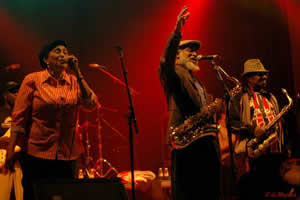 The Skatalites have performed on our stages several times, and satisfied with the response from our borucua crowd visit us again on febuary 6 at El Anfi with Eek-A-Mouse and locals Cultura Profética and Yerba Bruja.
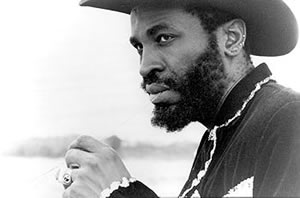 Eek-A-Mouse
Born: Ripton Joseph Hylton
November 19, 1957. Kingston, Jamaica, West Indies.
It is not only Eek-A-Mouse's 6 feet 6 inches height that make him one of Jamaica's most individual talents. He has created a style all his own, and gone on to become something of an international phenomenon quite apart from the rest of the world of reggae. Hylton's unusual name was originally that of a racehorse upon which he frequently lost money; when the horse finally won a race, he had, of course, refused to back it.
"My Father's Land" and "Creation", his first two releases, came out under his real name in the mid-70s. Not only were they made while he was still in college, they were produced by his math teacher Mr. Dehaney.
In 1980, he started recording with Joe Gibbs after working briefly with the Papa Roots, Black Ark, Gemini, Jah Life, Black Scorpio and Virgo sound systems.
"Wah Do Dem" was the 1980 single that made his name in Jamaica. Even though it was considered too controversial for radio airplay. It was followed by "Modelling Queen," another JA hit single that appeared on his first album "Bubble Up Yu Hip". Both were produced by singer Linval Thompson and issued on his Thompson Sound label in Jamaica.
By 1981, he had teamed up with producer and Volcano sound owner Henry "Junjo" Lawes and had achieved significant hits with "Once A Virgin", "Modelling Queen" and "Virgin Girl". Before the year was out, the artist had joined forces with producer Junjo Lawes and remixer Scientist. Backed by the Roots Radics, Eek cut "Virgin Girl" and "Noah's Ark," before having another go at "Wa-Do-Dem," for Greensleeves. The latter did the trick and Eek-A-Mouse had arrived with a sound so unlike any other, equal parts singing, DJing, and disconcerting Oriental-esque weirdness, that soon all of the island was raving about the rodent.
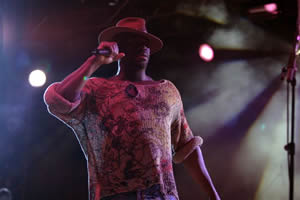 He was the toast of Reggae Sunsplash in 1981, his bubbling lunacy providing a cathartic release to a festival otherwise in mourning for Bob Marley. "Biddy biddy beng" roiled out across the crowd, and the audience shouted it back as one, instantly cementing the syllables as the catchprase of the new decade. Eek saw out the year with the holiday hit, "Christmas A-Come."
1982 was the year of the Mouse, with a litter of smash singles including "Wild Like a Tiger," "For Hire and Removal," "Do You Remember," and "Ganja Smuggling," and the seminal album "Wa Do Dem," rounding up most of the hits and more. With "Operation Eradication," Eek proved there was a thinking man inside the mouse costume on a single inspired by the tragic vigilante killing of close friend and fellow DJ Errol Scorcher. A rabid appearance at Reggae Sunsplash was also captured on tape and released in 1984. "Skidip!" appeared before the year closed and although it was less hit-driven than its predecessor, was just as strong nonetheless.
More smash singles followed in 1983, while "Mouse and the Man" proved to be another classic set. Again produced by Linval Thompson and backed by the Roots Radics, this remains one of the artist's masterpieces. The following year's "Mouseketeer", produced by Junjo Lawes, included several hits, while also taking on contemporary issues and finally answering fans' number one question on "How I Got My Name." A distribution deal with Shanachie later put these records in the hands of American reggae fans.
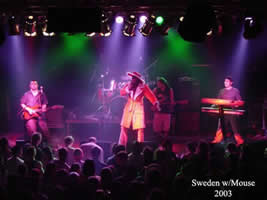 In 1985, Eek began working with producers Anthony and Ronald Welch, for whom he recorded the "Assassinator" album, which was his U.S. debut on the RAS Records label. It was a rather depressing and violent affair thematically, although even the most serious subjects have a comic irony under the artist's oddball delivery. Surprisingly, or not, Eek's international audience was found amongst the rock crowd. Which explains why "The King and I", also released that year, was recorded in the U.K. with producer Cliff Carnegie.But it was on 1988's wittily titled "Eek-A-Nomics" that the DJ began seriously courting this new audience. Bolstered by the hit single "The Freak," a version of the Addams Family theme song.
Eek signed to the Island label the following year and even grabbed a role in the film New Jack City, playing Fat Smitty. "I do seven or eight minutes in the movie but they cut me down to one minute and I was pissed. Lost my Oscar!," Mouse laments. He later passed on a part in Steven Seagal's "Marked For Death," after reading the script. "It had some bad vibe about Jamaicans. It have Rastaman doing all kinda voodoo and drugs."
The "U-Neek" album,which included tracks produced by Gussie Clarke, Daddy-O and Matt Robinson, was the pinnacle of cross-pollination between reggae and rock, highlighted by a cover of Led Zeppelin's own Hindenberg attempt at reggae, "D'Yer Maker." The album also spawned the hit single "You're The Only One I Need," and an appearance on The David Letterman Show. Unfortunately, this was to be Eek's first and last album for Island.
It wasn't until 1996 that a new full-length, "Black Cowboy", appeared on the Sunset Blvd./Explicit label. Though his voice seemed to have dropped an octave, the breadth of subject matter, as well as his patented "bingy-boingy" style indicated that Da Mouse was still "in the house."
Mouse continued to tour almost constantly throughout the end of the 90's and into the millenium, performing an amazing 200-250 shows a year. While still finding time to appear on collaborations with different artists including Cocoa Brovaz, POD, Papas Culture, MC Torch, and BranVan3000. Also, appearing on various riddim albums from the UK. before releasing "Eeksperience" on Coach House Records in early 2001.
A chat with Eek-A-Mouse is something of an aural adventure. More than a quarter-century of recording, global touring and enough years of residency in the suburbs of Irvine to justify an accent heavy on California mall girl-isms have hardly changed the dancehall godfather's husky Kingston patois. Though his voice is smooth and rich in tone, Mouse's unique re-imagining of English grammatical rules can prove challenging to the unprepared ear.
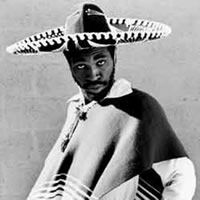 Take a conversation touching on Mouse's feelings about his music's place among reggae's current crop of dancehall favorites. While a couple of decades removed from the early '80s Jamaican dancehall scene that solidified his reputation as one of the genre's most irreverent and oft-copied toasters, The Mouse — as he is fond of calling himself — hardly feels his career has peaked or that his time has passed.
"I'm Mouse, you know? I'm Mouse, so I can change my style any time. There's different reggae now ... hip-hop, dance, regular reggae. Just like Eek-A-Mouse. I'm also unique, you know? Different."
"I loved Nat King Cole, Marty Robbins, Cab Calloway, Patsy Cline ... all different singers. Sam Cooke and The Beatles ... and stuff like that," said Mouse, rhapsodically. "And then I came up with my own original style."
That "original style" included elements of "sing-jaying," an early form of toasting (boastful catch phrases, singing and DJ work) mixed with funky vocal gymnastics and effects. Mouse's contribution to the genre was a percussive, nasally vocal style, and a talent for using his voice as a musical instrument that moved The Boston Globe to call him "the Al Jarreau of reggae." Much to his chagrin, Mouse has also often been called the originator of "sing-jaying."
Biographies from artist's myspace pages and artistopia.com